Japan reads differently
Japan is one of the most context-dependent food markets in the world. It rewards products that fit its context and quietly declines the rest. The reasons are rarely visible in market data, because much of what drives Japanese purchase decisions is embedded in the culture rather than stated on the pack.
- Shelves are dense with meaningSeasonality, origin, the maker's face, the register of the copy. A Japanese package speaks through layers of context. What reads as "clean and confident" design at home can read as "nothing to say" here, and vice versa.
- Trust is built differentlyRelationships and continuity matter more than claims. How a brand earns the right to be believed in Japan follows a different grammar than in most Western markets.
- Adaptation hides behind authenticityThe Japanese market adapts foreign products substantially, while framing the result as authentic. What survives entry is rarely the product exactly as designed. The real question is what to keep, what to translate, and what to let change.
- Standard research misses itSurveys and trend reports read what is written and said. Japan's embedded values, the ones that decide whether your product lands, mostly are not. They have to be observed in the field and interpreted.
Food Culture Map
A working framework for measuring cultural gaps in food business. It builds on the Culture Map developed by Professor Erin Meyer of INSEAD, under whom I studied directly, and extends it for food through first-hand fieldwork in stores across Europe, the Middle East, North America, and Asia.
The map currently reads food-culture differences along seven axes:
- ①How much is said
- ②In what order
- ③How "local" is shown
- ④How tradition is framed
- ⑤How borrowed foods are treated
- ⑥How trust is built
- ⑦How nature is understood
The Food Culture Map is not a finished product, and it is not a map for putting countries into boxes. It is a hypothesis map: you place your product and your target market on it, and measure the gap. It is continuously tested and revised through fieldwork and client work.
About the founder
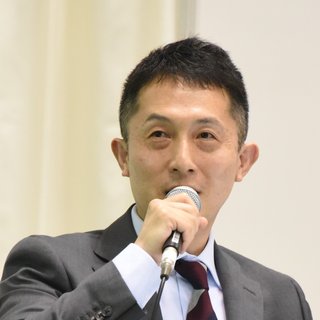
Joe Tanaka — Founder, Beyond Nippon LLC
I have spent more than a decade inside the Japanese food industry, from farming and product development to market expansion and global food-trend research.
I have also worked from the other side of the table: years inside European global companies, responsible for bringing their products into the Japanese market. I know first-hand how hard that is, where foreign products get stuck, and what it takes to get them through.
And I walk the stores myself. Europe, the Middle East, North America, and Asia; in 2026, fieldwork in Australia, New Zealand, Thailand, and Vietnam, with interviews with local makers and industry insiders. Through that fieldwork I analyze how food trends and food culture differ between Japan and other markets, and turn the differences into something you can use: the barriers you will meet in Japan, the ways through them, and the opportunities you would otherwise miss.
- Completed INSEAD's Leading Across Borders & Cultures Programme, taught directly by Professor Erin Meyer
- Columnist for over seven years in a monthly new-product-trends journal published by Nihon Shokuryo Shimbun, Japan's leading food-industry newspaper
- Columnist for Nihon Pan-Kashi Shimbun, Japan's bakery and confectionery trade newspaper (since May 2026)
- Author of the column "From Asia's Shelves" for NNA Kanpasar, the Kyodo News Group's Asian business magazine (since August 2026) — first article (in Japanese)
- Regular speaker at food-industry events in Japan and abroad, including FABEX, Anuga, and Seoul Food
- Based in Takasaki, Gunma, about one hour from Tokyo by Shinkansen. Working in Japanese and English